In Vetspire, an encounter is a complete record of an interaction between veterinary staff and a client and patient. In addition to SOAP notes, encounters are used to record exams, treatments, surgeries, follow-ups, client communications, orders, prescriptions, and more! Each encounter is saved to the patient’s chart and accessible as part of their medical record.
Vetspire Recommends
Encounters are typically opened during or after a patient’s appointment to capture all of the details of their visit to your practice.
Each encounter is generated using an encounter type. An encounter type is a template that includes customizable sections for entering different types and categories of data, such as vitals, diagnostics, or follow-up instructions.
Org admins can create and manage encounter templates in More > Admin > Configure > Encounter Types.
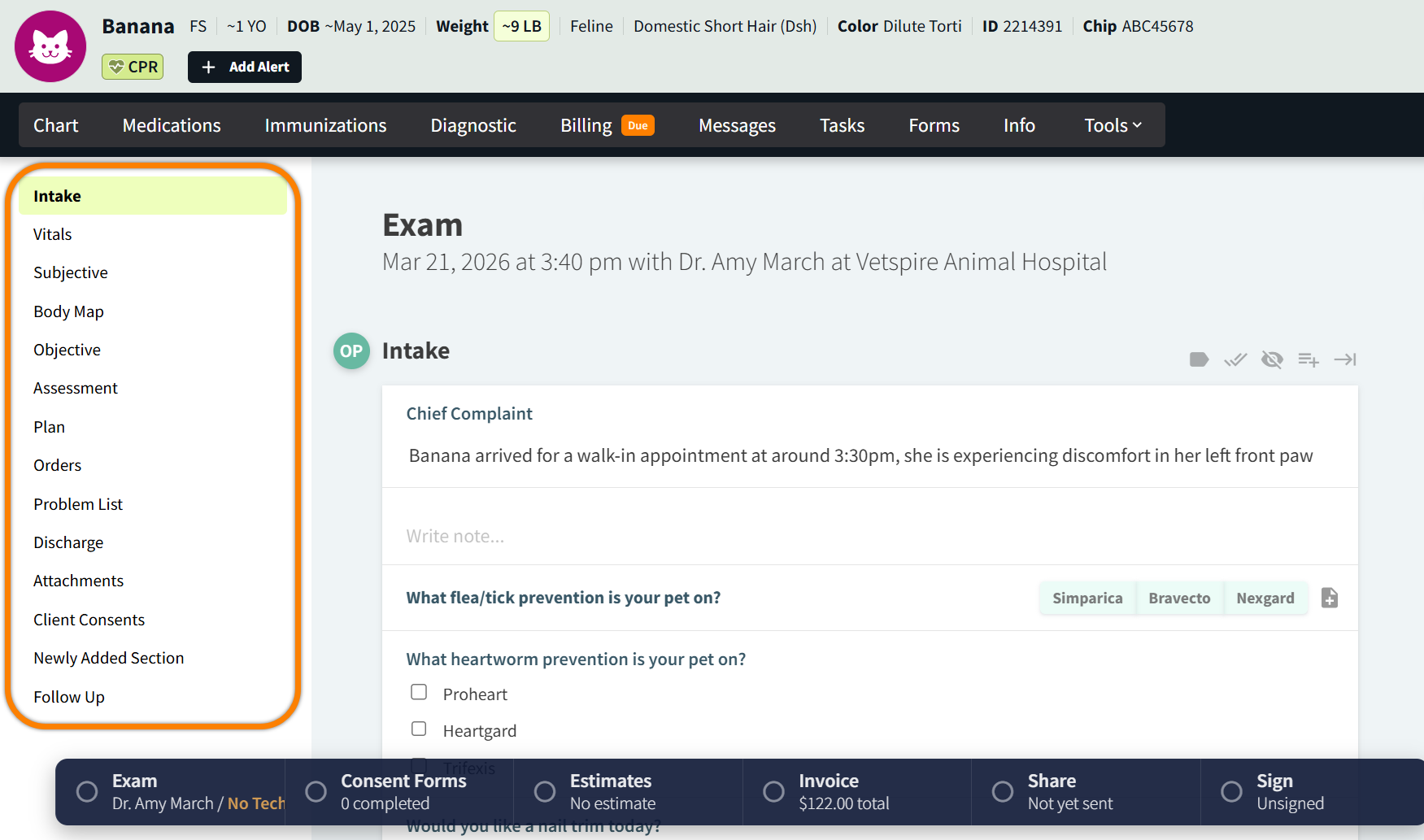
Use the table of contents in the left panel to navigate through the different sections of the encounter. The sections are determined by the encounter type.
Support for Multi-User Editing in Encounters
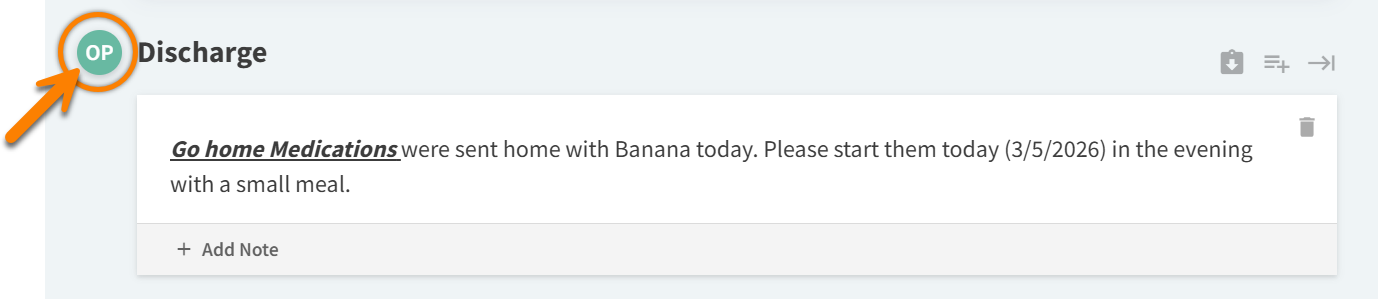
Multiple Vetspire users can access the same encounter at the same time. The system displays the initials of the user currently editing each encounter section. While the user is actively editing the section, it displays as locked (grayed out) to other users so that their edits are not overwritten.
Encounter Footer
The encounter footer displays for all encounter types:

-
General: Displays the name of the encounter template, assigned provider, and assigned technician. Select this tab to view and edit the Encounter Details.
-
Consent Forms: Displays all consent forms that have been sent for this encounter, each form status (Signed or Unsigned), and the signature date and time. From this tab, you can email, text, or print a new consent form.
-
Estimates: Create and download estimates, convert estimates to invoices, and take deposits from this tab.
-
Invoice: View, finalize, and collect payment for the client’s invoice from this tab.
-
Share: Email or download a PDF copy of the encounter, discharge instructions, or referral letter from this tab. Encounter documents can be shared with clients, rDVMs, and any specified email address. Learn more about sharing encounter PDFs.
-
Sign: Signing an encounter means that all of the information it contains is complete and accurate. This action closes the encounter.
Encounter Buttons
Some encounter sections have icon buttons that you can use to take certain actions.
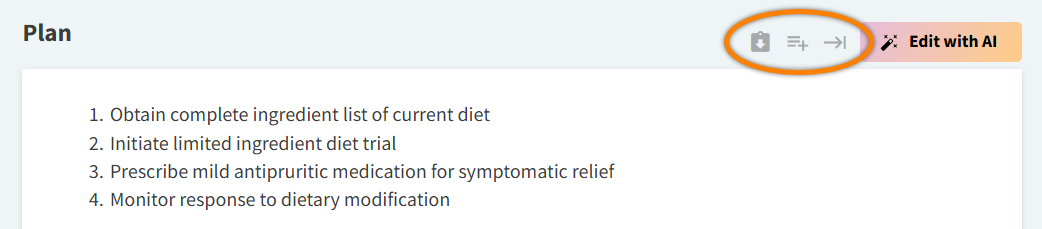
The following table describes all available encounter buttons.
|
Action |
Description |
|---|---|
|
|
Add an embeddable encounter template inside the current encounter. |
|
|
Print unique label with patient’s name and ID, date, and Objective section selections. |
|
|
Answer all Normal/Abnormal questions as “Normal.” |
|
|
Mark all Normal/Abnormal questions as “Not Examined.” |
|
|
Transfers all information from the patient’s previous encounter into the current encounter when both encounters have the same section. (Example: You can only copy the Intake section from the previous encounter when the previous encounter has a completed Intake section.)
|
|
|
Adds a line for additional notes within the encounter section. |
|
|
Lists all active medications (with dosage and instructions) in encounter section. |


Encounter Font Shortcuts for Windows PCs
-
Bold your text: Ctrl + B
-
Underline text: Ctrl + U
-
Italicize text: Ctrl + i.
-
Bullet points: - + Spacebar or * + Spacebar
-
Start numbering, and the sequence will follow. If you don't want the number sequence after (1) or bullet points. Press the Shift + Spacebar.
Encounter Events Log
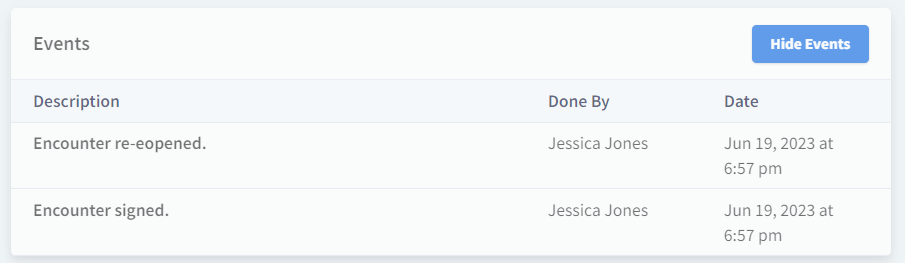
Located at the bottom of each Encounter, above the Footer, there is a Current Events log which will be stamped with the date, time, and user each time an encounter is signed and re-opened.